
Arrest Warrants in Isanti County
An arrest warrant is a court's order to take someone into custody on a charge. In Isanti County, the process starts when law enforcement hands a complaint and supporting affidavit to the prosecutor. From there a District Court judge weighs the facts and asks two things: did an offense occur, and did this person commit it? Only probable cause on both points moves the case forward. Minnesota procedure also prefers the gentler path. A summons comes first unless the rule's conditions call for more, such as signs the person will not respond, an address that cannot be found, or a risk of imminent harm. So a charge alone does not create an Isanti County arrest warrant. The judge still has to decide that a warrant is necessary.
Minnesota Rule 3 and the Isanti County District Court Judge
Rule 3 of the Minnesota Rules of Criminal Procedure sets the issuance standard for the whole state. The complaint must show probable cause. A District Court judge, not anyone else, must issue and sign the warrant, and it must name the person and the charged offense with specificity. Bail and other release conditions are set by a judge and printed on the face of the warrant. The rule also demands that supporting facts be sworn, which is why the affidavit sits at the heart of an Isanti County arrest warrant. Want to know why one issued? Read the complaint and affidavit in the court file. The full text is at Minnesota Rule of Criminal Procedure 3.
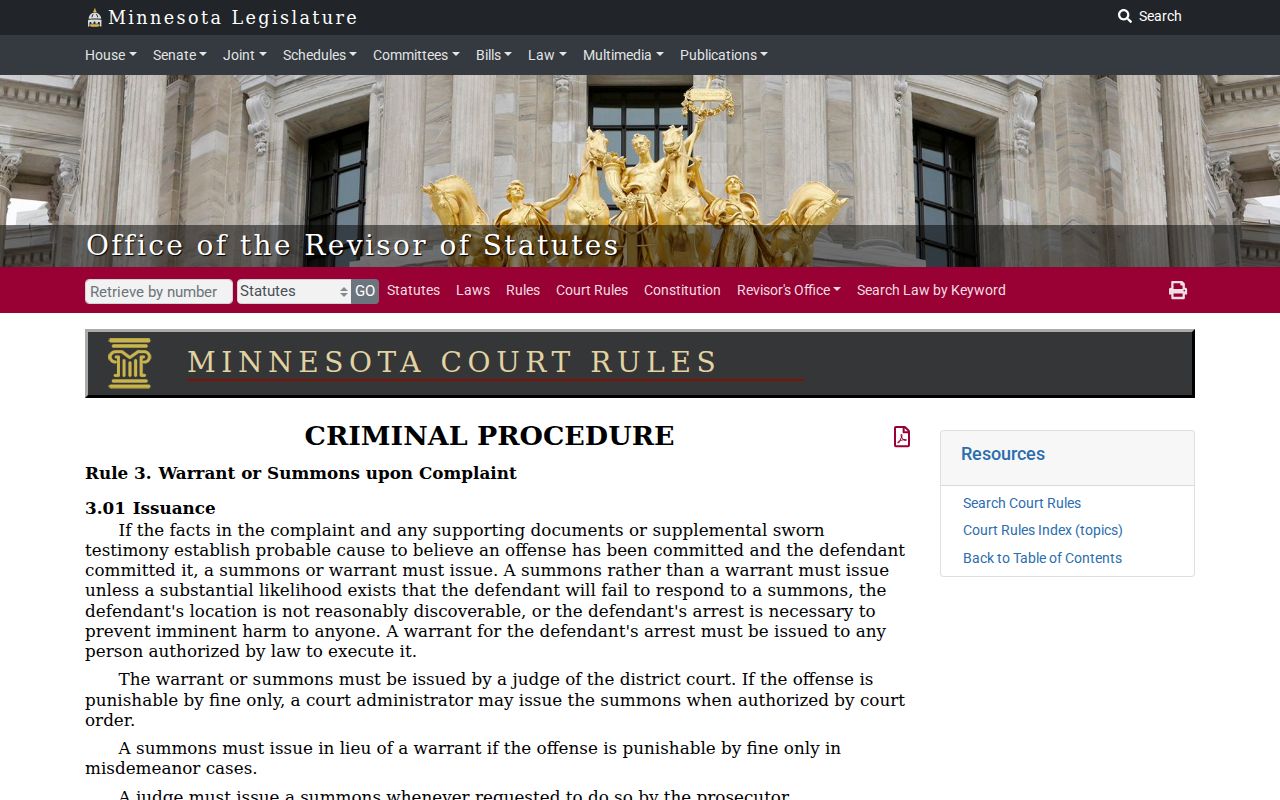
The rule is statewide, so the Isanti County arrest process follows a pattern shared across Minnesota.
What an Isanti County Arrest Warrant Contains
The warrant paper holds more than the public listing shows. The Isanti County sheriff's table lists seven columns. Read the warrant with the complaint, though, and you get the charge, the release conditions, and the case driving the whole process.
| Warrant Number | Court-style prefix and digits, for example 30CR, which points to a criminal case file |
|---|---|
| Defendant | The person named or described in the warrant, which the public table lists as name and age |
| Offense Charged | The offense described in the warrant, drawn from the complaint |
| Issuing Judge | The District Court judge who signed the warrant. Not shown on the public table |
| Bail and Conditions | Release terms set by the judge and stated on the warrant |
| Probable Cause Basis | The sworn complaint and affidavit that supported issuance |
| Offense Level | Felony, gross misdemeanor, or misdemeanor, which the public table does display |
How Isanti County Arrest Warrants Are Served
Serving a warrant is not free-lance work. An officer authorized by law must execute it, and Minnesota rule permits execution anywhere in the state unless a law says otherwise. That means Isanti County sheriff's deputies, city police, State Patrol troopers, and other authorized officers can each serve a valid warrant within their authority. The sheriff's office is built for the job. Its patrol division runs seven days a week, 24 hours a day, with three sergeants and twelve deputies who hold county-wide jurisdiction and serve process. What happens after the arrest follows a set rhythm. The person goes before the issuing court if it is in session, or without unnecessary delay and no later than 36 hours after arrest, excluding the day of arrest, or as soon as a judge is available. For custody and booking questions, the county jail page puts both inside the Sheriff's Office, which is the right counter after a service.
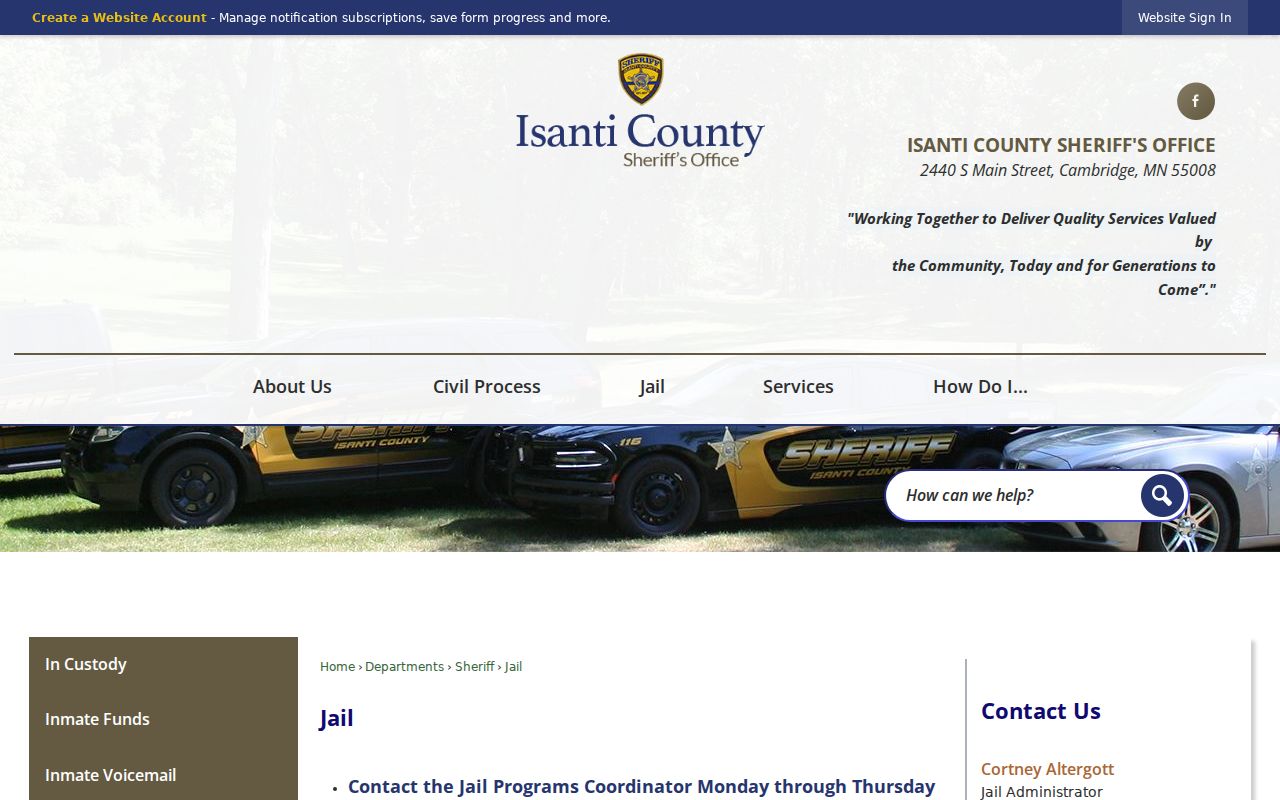
Once a warrant is served, Isanti County custody questions belong to the jail and the sheriff, not the court counter.
The 36-Hour Direction After an Isanti County Arrest
The clock after an arrest is short. Minnesota rule directs that the arrested person be brought before the issuing court promptly when it is in session. Otherwise it must happen without unnecessary delay and within 36 hours, not counting the day of arrest, or as soon as a judge is available once no judge is free. For an Isanti County case, that first appearance is where bail and release conditions get addressed. The bond documents and bail rulings then land in the court file.
Arrest Warrant vs Summons vs Bench Warrant
Minnesota uses three separate routes to bring a person before the court, and each carries different authority. Knowing which one applies is the quickest way to read an Isanti County entry correctly. The distinctions matter more than people expect.
| Point of Comparison | Arrest Warrant | Summons | Bench Warrant |
|---|---|---|---|
| How it starts | Complaint and probable-cause finding | Complaint where a warrant is not needed | Missed appearance or violated court obligation |
| Immediate arrest | Yes, under the warrant terms | No | Usually yes, but sign-and-release warrants carry none |
| Bail | Set by the judge and stated on the warrant | Set later if the person appears | Depends on the case and the statutory category |
| Public record route | Sheriff table plus MCRO, subject to confidentiality before service | MCRO case record and court notice | Sheriff table and the case Register of Actions |
In Isanti County, an unanswered summons can turn into a warrant. A warrant can also be recalled while the case itself moves on.
What the Isanti County Active Table Leaves Out
The public list helps, but it is incomplete. It carries the warrant number, name, age, date, bond amount, offense level, and description. It does not carry the judge, issuing court, holding agency, date of birth, or a status code. Minnesota law adds another layer: arrest warrant index data stays confidential until the defendant is in custody, served, or appears, unless the agency finds a public purpose in releasing it. A recent Isanti County arrest warrant can exist, in other words, without showing on the public page. A blank result proves nothing. Confirm with the sheriff's Records line at 763-691-2480 or with Court Administration before concluding anything from the table.
Bail Conditions and the Isanti County Court Record
Bail belongs to the judge, not the sheriff. In Isanti County, the warrant lists whatever release conditions the court set. The amount is enforced through the court process, so a figure on the listing answers only part of the question. Minnesota's bail-bond program lets approved agents and sureties write appearance bonds in district court matters. The state also publishes the forfeiture and reinstatement procedures. The Isanti County table may show a bond amount yet explain nothing about a zero entry or how to pay. Ask Court Administration what the release order requires. Confirm with the jail before sending money, and read up on the Minnesota bail bond program. A bond is a promise to appear, not a payment that closes the case.
Federal Arrest Warrants Outside Isanti County
Federal warrants run on a separate track. Isanti County sits inside the U.S. District Court for the District of Minnesota, where a federal judge or magistrate judge issues an arrest warrant through a federal criminal process. Service may come from the U.S. Marshals Service, federal agents, or authorized task-force partners, including the North Star Fugitive Task Force. None of it shows on the Isanti County sheriff's table. Federal dockets are searched separately. The national case locator updates on its own schedule, and sealed documents may stay invisible. The District of Minnesota court locations page lists the courthouses that handle these cases.
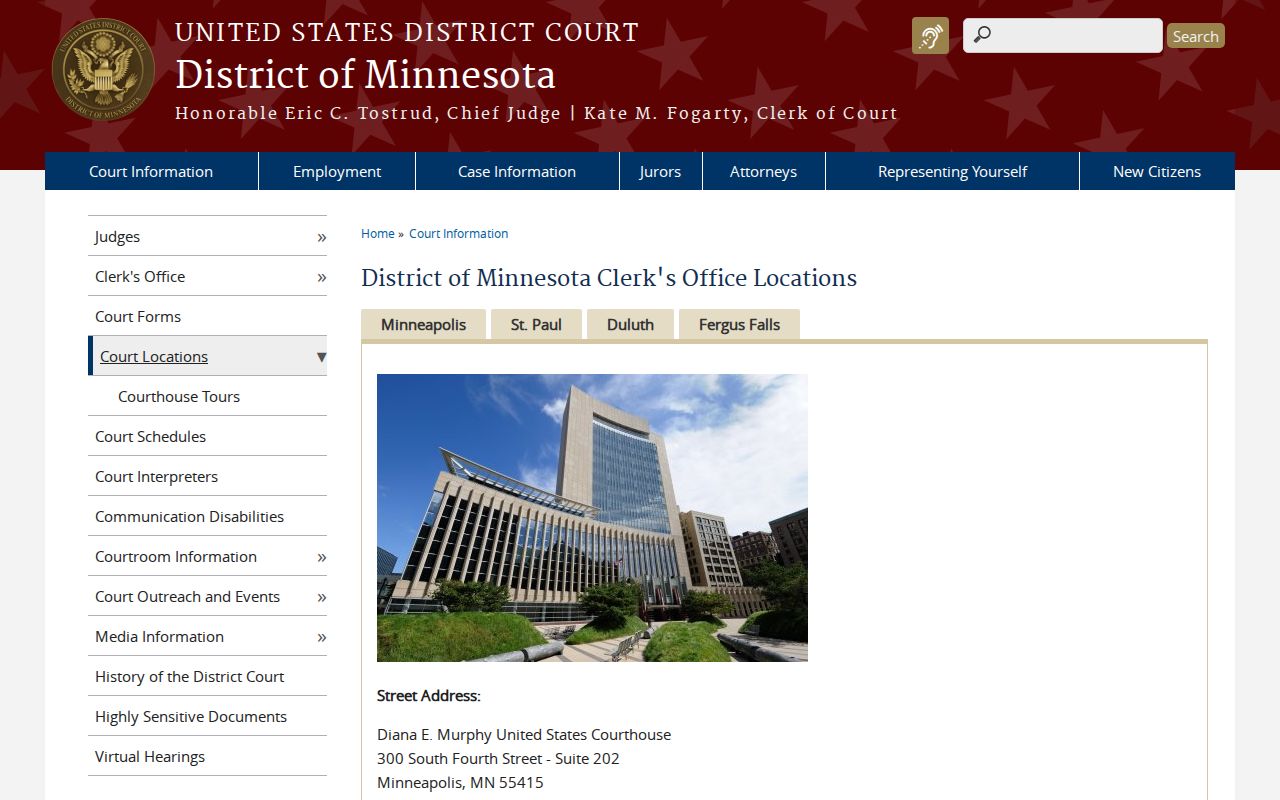
Give federal records their own check when a name is missing from Isanti County or state court channels. The Federal case locator information page explains the nationwide search tool.
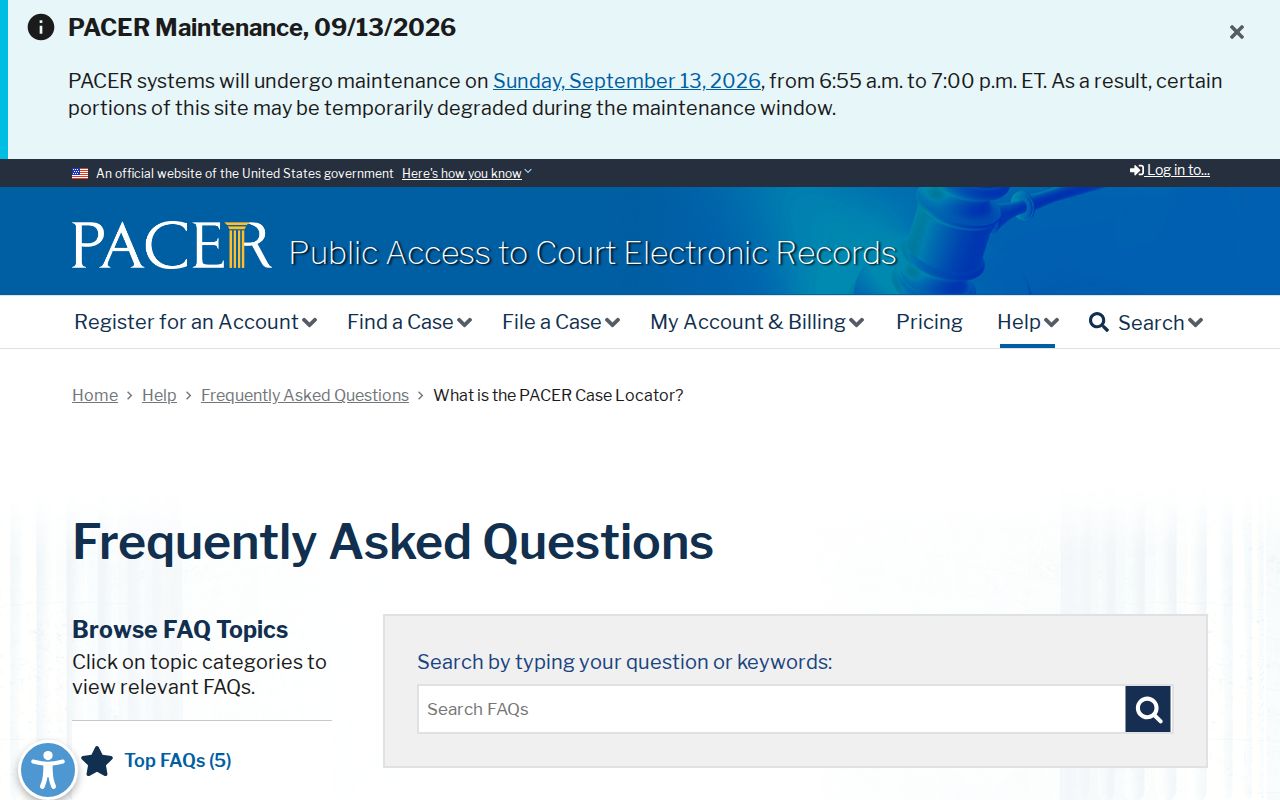
Even then, a federal search works as a case lookup, not a live warrant database. A warrant may be sealed, or it may simply not be indexed yet, so Isanti County channels and federal ones answer different questions.
The Isanti County Attorney's Charging Role
The Isanti County Attorney's Office prosecutes felony and juvenile offenses countywide, plus certain misdemeanors. City misdemeanors in Braham, Cambridge, and Isanti run under a separate contract arrangement. The office itself does not investigate. Police and the sheriff gather evidence, then submit it for charging review. That division explains the paper trail behind an arrest warrant. A police report becomes a charging decision, the decision becomes a complaint, and the complaint becomes a warrant once a judge finds probable cause. Spotting which step produced the Isanti County document in front of you tells you who can answer questions about it.
What to Do If There's a Warrant for You
Never act on the listing alone. Write down the warrant number, the case number, the offense level, the description, and any bond amount. Then call Court Administration at (763) 290-7020 and ask what the court requires in that case. Minnesota leaves three general paths: voluntary surrender, posting bond under the court's release order, or a motion asking the court to recall or quash the warrant. Isanti County publishes no surrender window, no bond counter hours, and no walk-in docket, so showing up the same day without instructions is a gamble. One narrow state rule covers felony failure-to-appear charges, where a voluntary surrender within 48 hours can require dismissal of that charge, though it is no general amnesty. An attorney can contact the court and the sheriff's office for you when custody or bond risk is unclear. The steps mirror those for an Isanti County bench warrant.
Important: Talk to a Minnesota attorney before turning yourself in, since an open arrest warrant can lead to custody at any traffic stop or police contact.